Milk tea, bubble tea, boba, pearl milk tea, Taiwanese milk tea… The names overlap and contradict each other. We put every word back in its place, jargon-free.
The gist in three lines
Milk tea simply means tea infused with milk added. No pearls required, no toppings imposed. English black tea with a splash of milk is already a milk tea, and so is the Taiwanese milk tea that started today’s craze.
This broad definition explains the confusion: most people in France picture an iced drink with pearls — that is actually a bubble tea. Milk tea is the parent category; bubble tea and boba are variations built on it.
Every good milk tea shares one thing: the quality of the starting tea. A weak tea vanishes under milk and sugar; a tea with character keeps its aromatic signature.

In Hong Kong, "silk stocking" milk tea blends a strong black tea, filtered through cloth, with sweetened condensed milk. Bold, warm, no pearls — a traditional drink for meals.
In Taiwan, the late 1980s brought the idea of adding tapioca pearls to iced milk tea. Taiwanese milk tea keeps a real brewed base, usually a quality oolong or black tea, never just flavoured powder.
This dual origin — Hong Kong for the bold cup, Taiwan for the iced pearls — is why the vocabulary floats so much. Both are right; they simply describe different branches of the same tree.
The same milk tea changes completely depending on temperature — it affects the brew, the texture and how sweet it tastes.
Comforting, intimate, it reveals the malty rounded notes of the tea. Pearls, if any, stay warm and soft. The winter version, close to Hong Kong nai cha.
Fresher and thirst-quenching, it needs a stronger brew to offset the melting ice. The most common base of modern bubble tea.
A good tea house adjusts the brew strength to the target temperature, so the flavour never drowns in ice.

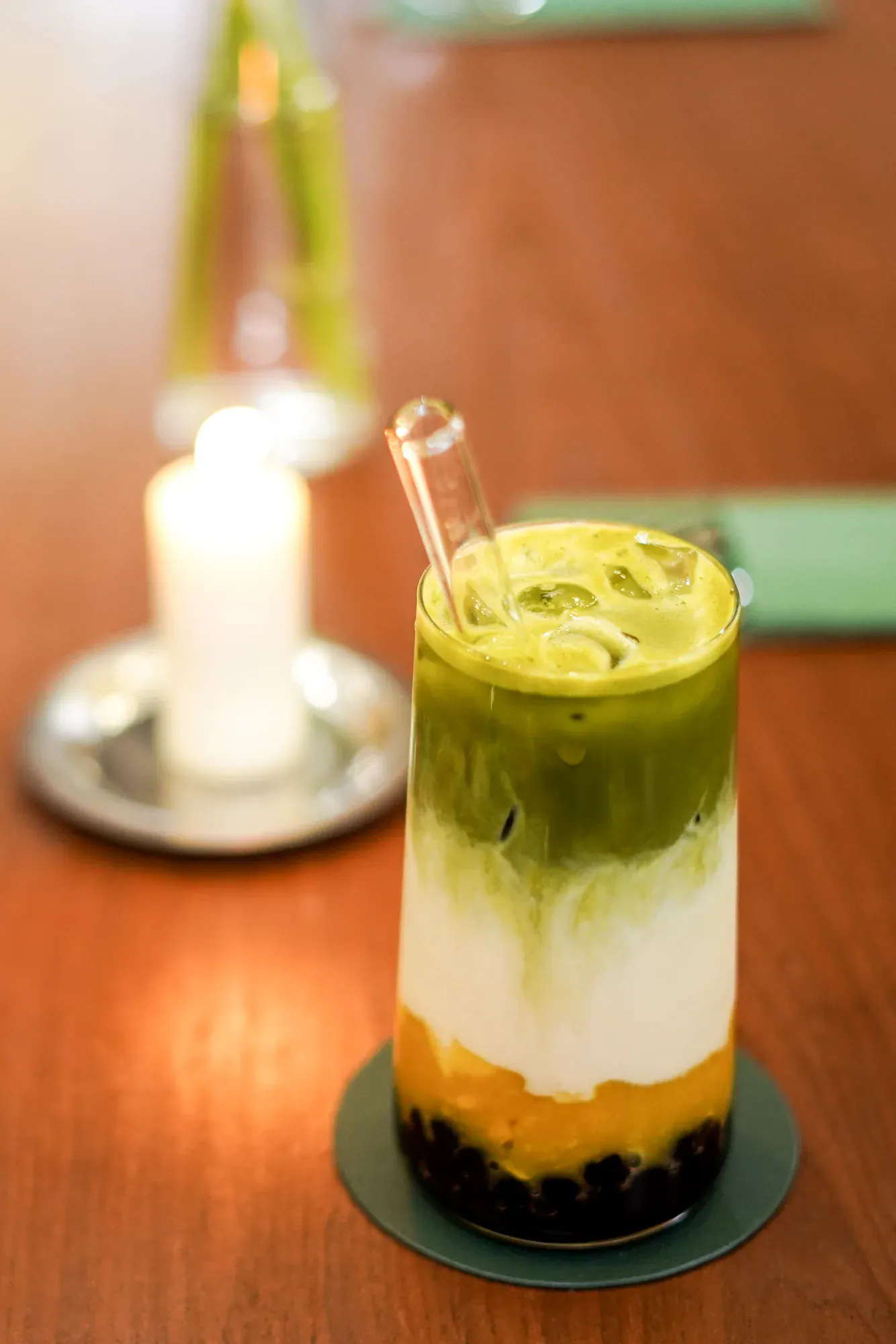
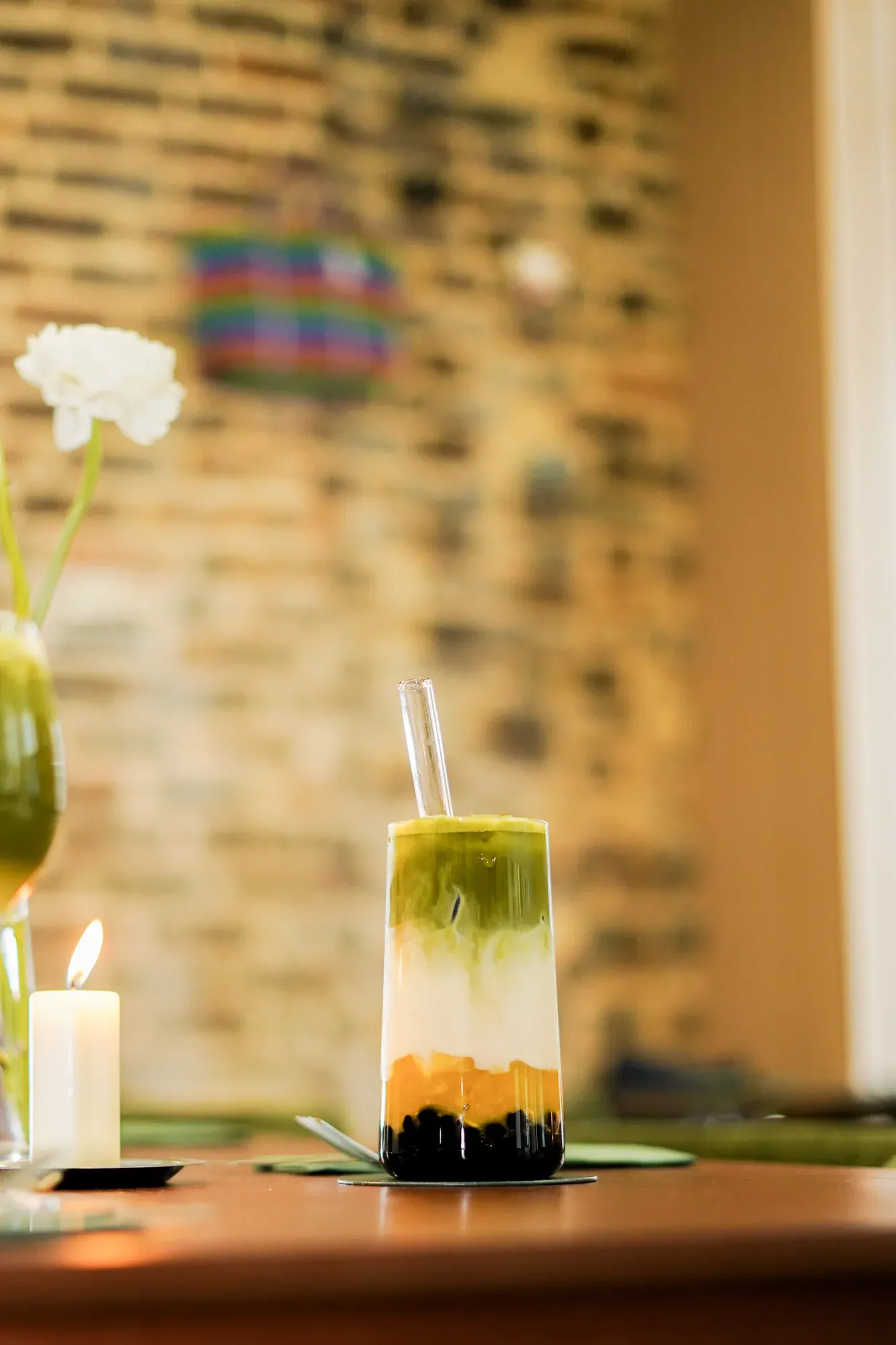
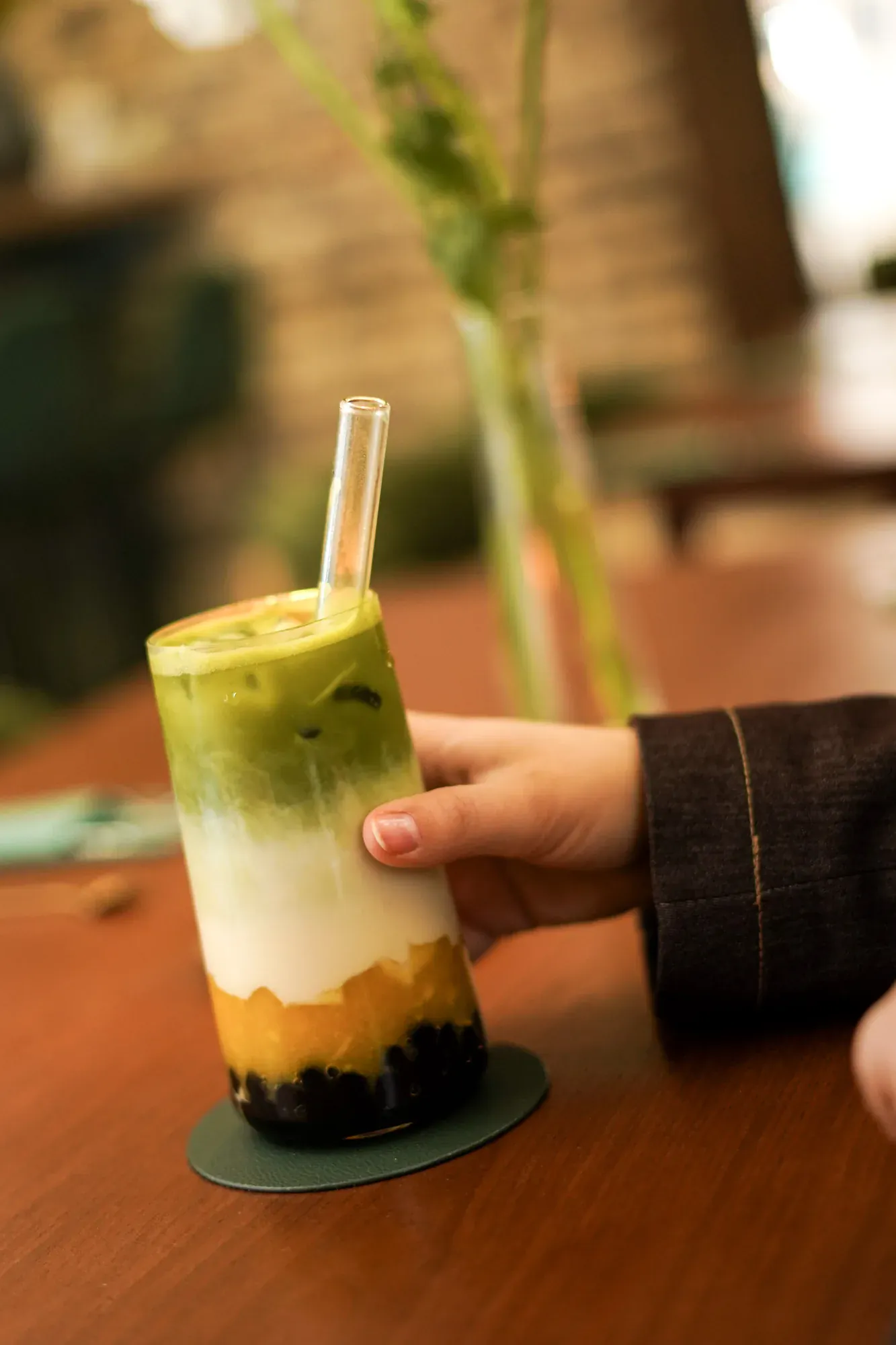
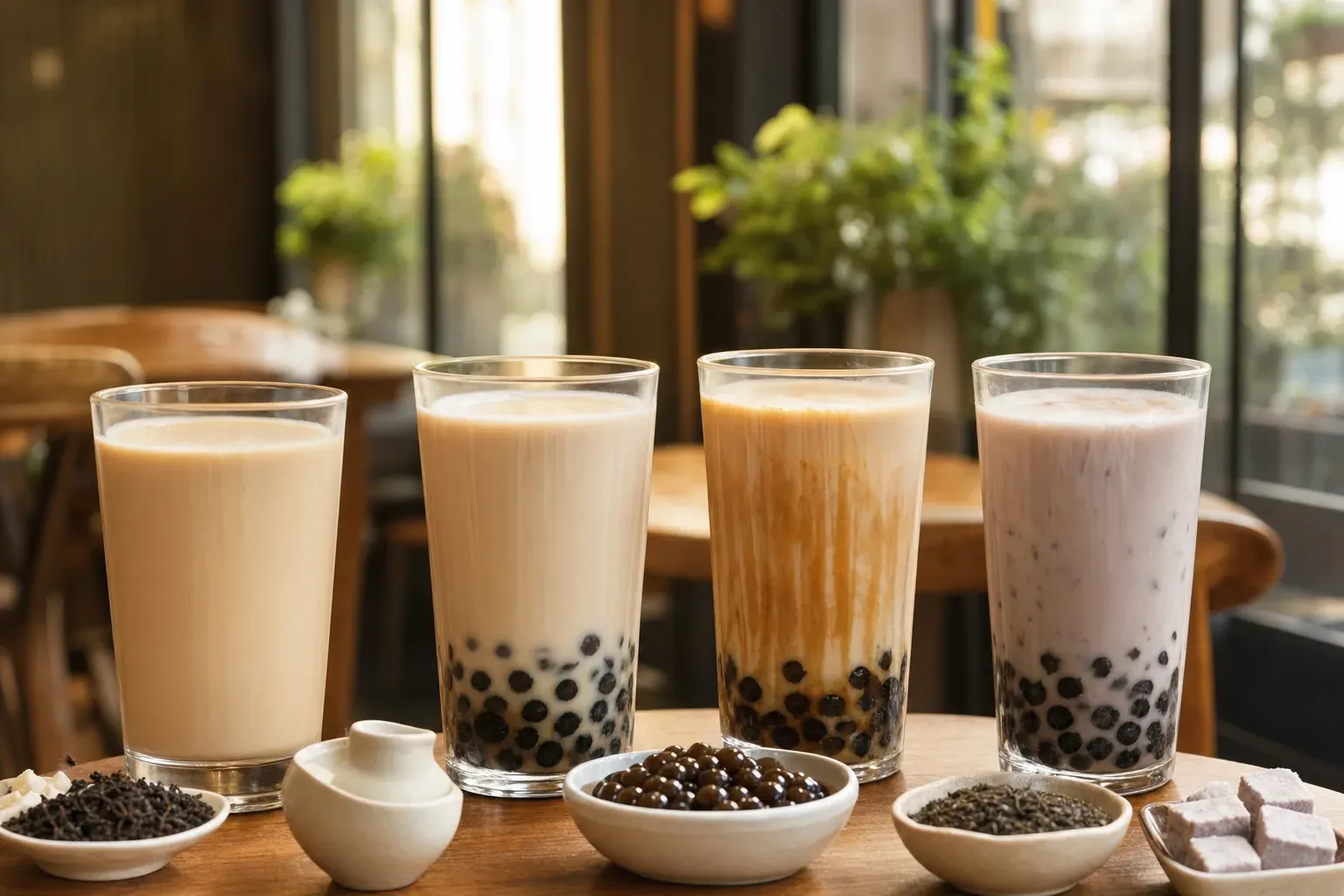
Bubble tea starts from a tea base — with or without milk — and adds tapioca pearls, the tender beads you sip through a wide straw. That playful texture went global.
Key point: every bubble tea is a tea (often a milk tea), but not every milk tea is a bubble tea. The pearls and toppings make the difference, not the tea itself.
You can even make a bubble tea with no milk at all: an iced plain tea with pearls. "Bubble tea" names the drink with pearls, not the presence of milk — so the two terms are not true synonyms.

Almost everyone thinks "bubble" means the tapioca pearls. Originally it meant something else: the foam formed on the surface when the tea is shaken hard with ice.
The pearls are called "zhen zhu" (pearls) or "boba". The full drink was long called "pearl milk tea". So remember: the bubble is the foam; the boba is the pearl.
Breaking a bubble tea down is the best way to see what separates an industrial version from a house-brewed one.
The heart. Real brewed tea gives character; reconstituted powder gives a flat, sugary drink. The first quality marker.
Fresh milk, condensed milk or a plant option (oat, soy). It rounds the tea. A milk tea can also go without.
Classic tapioca pearls sweetened with muscovado, or popping boba that burst in the mouth.
Coconut jelly, azuki beans, cheese foam, pudding. The unspoken rule: no more than two, or the tea is lost.
In original Taiwanese usage, "boba" means the large tapioca pearl — a word for the bead, not the drink.
In Western usage, especially the US West Coast, "boba" came to mean the whole drink: "let’s get boba" means "let’s get bubble tea". Only context tells which is meant.
In practice boba, bubble tea and pearl milk tea now largely name the same iced pearl drink. Purists split the pearl from the drink, but everyday use blends the three.
The four names side by side, with what truly sets them apart.
| Name | What it means | Pearls? | Milk? |
|---|---|---|---|
| Milk tea | The base: tea with milk, hot or iced | Not by default | Yes, by definition |
| Bubble tea | Tea (often milky) with pearls and toppings | Yes | Common, not required |
| Boba | The tapioca pearl, or the whole drink | Yes (the pearl) | Depends |
| Taiwanese milk tea | The original, built on real brewed tea | Optional | Yes, with quality tea |
Beyond the words, what makes a good milk tea? The tea. Authentic Taiwanese milk tea never starts from flavoured powder — it starts from a real brew: high-mountain oolong, malty Sun Moon Lake black tea, delicate jasmine.
That is the gap between industrial and artisan milk tea. Powder gives a uniform, over-sweet drink; brewing gives depth, where milk rounds without masking. Pearls cooked several times a day complete the picture.
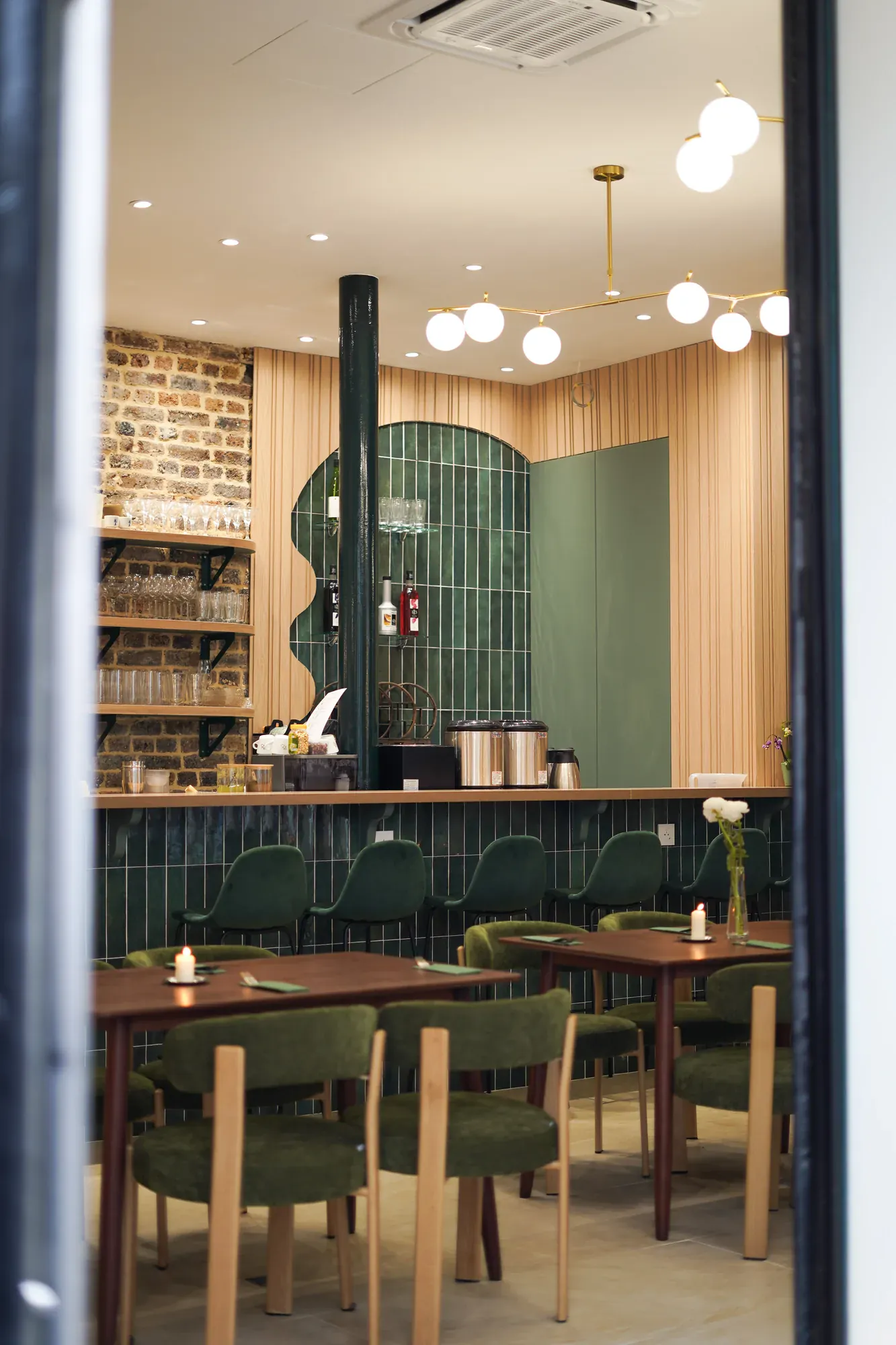
This is exactly Le Tê’s approach, a tea house by the Palais-Royal: real infusions, sugar set from zero to a hundred percent, a plant option always available. That starting quality is what marks a true Taiwanese milk tea. artisan bubble tea in Paris.

Always start from the tea. For roundness and comfort, a black-tea or oolong milk tea. For lightness, an iced jasmine with fruit beads. The curious can try a soft, almost vanilla taro latte.
Then set the sugar: fifty percent is a great first try. Classic tapioca pearls are easiest; popping boba surprise. And yes, you can have a milk tea without milk — a plain tea with pearls does the job.
The best tip is to be guided. Where the tea is truly brewed, the team explains, lets you taste, and adjusts for next time — the opposite of an order scrolling on a screen.
Also worth reading and exploring
At Le Tê, every milk tea starts from a real brew, with pearls cooked the same day. Come taste the difference between an artisan milk tea and an industrial drink.
No, but they are linked. Milk tea is simply tea with milk, no pearls required. Bubble tea is a tea (often milky) with added tapioca pearls and toppings. A milk tea served plain, without pearls, is not a bubble tea.
Both, depending on context. In original Taiwanese usage "boba" is the large tapioca pearl. In Western usage it came to mean the whole drink. Only context decides.
No. Milk tea is tea with milk, full stop. Pearls are the addition that turns a milk tea into a bubble tea. A hot Hong Kong-style milk tea has no pearls at all.
Indirectly yes: a plain tea with pearls is a bubble tea without milk. Many tea houses also offer plant options (oat, soy) for a milk tea with no dairy. Milk is never mandatory.
Bubble tea was born in Taiwan in the late 1980s, when tea houses added tapioca pearls to iced milk tea. "Bubble" first referred to the shaker foam before becoming the drink’s global name.
The quality of the brewed tea. A real tea with character keeps its signature under the milk, where industrial powder gives a flat, over-sweet drink. Same-day cooked pearls do the rest.
Go further
Want to move from theory to tasting? Come try a real house-brewed milk tea at Le Tê, by the Palais-Royal, and explore our pillar page on milk tea and boba in Paris.