When people think of Asian street food, they often think of Vietnamese banh mi, Japanese ramen, or pad Thai. Yet there's a street food tradition even richer and more diverse than most Parisians realize: Taiwan's. Taiwanese night markets are considered the best in the world by travelers, and the street food there is elevated to the level of culinary art. This food culture is finally gaining recognition in Paris, thanks in particular to MAISON LE TE.
Taiwan's night markets: birthplace of the world's best street food
Taiwanese night markets are not ordinary markets. They are true cultural institutions, gathering places that bring together thousands of people each evening to eat, socialize, and soak up the electric atmosphere. Every Taiwanese city has its night markets, and each one has its specialties.Shilin Night Market in Taipei is the most famous. Hundreds of stalls offer dishes cooked to order, amid a joyful cacophony of steam, aromas, and voices. Raohe Night Market, older and more traditional, is known for its genre classics. Ningxia Night Market specializes in traditional recipes. And every stall has its specialty, often passed down through generations.
What distinguishes Taiwanese street food from other Asian street cuisines is the attention paid to ingredient quality and preparation precision. A Taiwanese night market stall may prepare only a single dish, but it prepares it to perfection. This philosophy of mastering one product explains the exceptional quality of Taiwanese street food.
The iconic dishes of Taiwanese street food culture
Taiwanese fried chicken (ji pai)
Ji pai is probably the most popular night market snack in Taiwan. It's a large piece of chicken, marinated, spiced, breaded, and fried to a crispy crust. Unlike American-style fried chicken, Taiwanese ji pai is seasoned with a specific spice blend that often includes star anise, cinnamon, and white pepper. It's served piping hot in a paper bag and eaten while walking.
Bao and gua bao
The bao is a small steamed bun filled with meat (often pork), vegetables, and condiments. The gua bao, sometimes nicknamed the "Taiwanese burger," is a shell-shaped steamed bun that envelops braised pork, crushed peanuts, cilantro, and pickled vegetables. Its pillowy texture and contrasting flavors make it one of the most addictive dishes in Taiwanese cooking.
Lu rou fan (braised pork over rice)
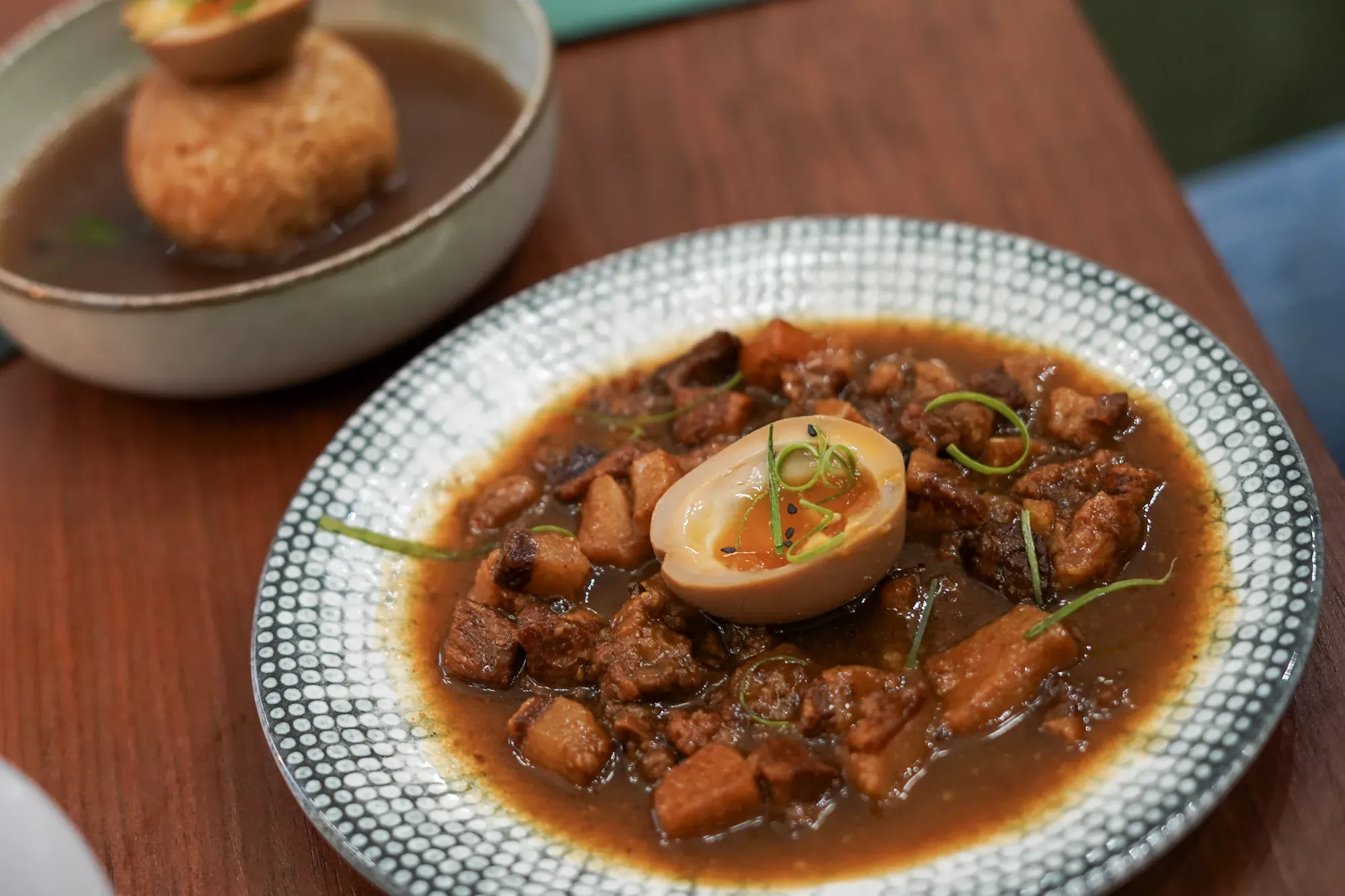
Taiwan's unofficial national dish, lu rou fan is a bowl of rice topped with minced pork slowly braised in a sweet soy sauce enriched with five-spice powder. Simple in appearance, this dish relies on the quality of the slow cooking that transforms pork pieces into a melting, fragrant topping. Every Taiwanese family has their own recipe, and debates about the island's best lu rou fan are endless.
Beef noodle soup (niu rou mian)
Beef noodle soup is another pillar of Taiwanese cuisine. The broth, simmered for hours with beef bones, spices, and tomatoes, develops an incomparable depth of flavor. Tender, melt-in-your-mouth beef chunks accompany thick noodles in a comforting bowl that serves as a complete meal.
Bubble tea: the quintessential street drink
Born in Taiwan's night markets in the 1980s, bubble tea has become a global drink. But in Taiwan, it remains deeply rooted in street culture. You find it at every corner of every night market, made with real brewed tea and fresh tapioca pearls. It's this authentic version that Le Te serves at the Palais-Royal in Paris's 1st arrondissement.
MAISON LE TE: Taiwanese street food elevated in Paris
To taste Taiwanese street food without flying to Taipei, MAISON LE TE is the go-to Parisian address. Located at 136 rue Saint-Maur in the 11th arrondissement, this Franco-Taiwanese restaurant founded by Hsuan-Hsuan Chang offers a refined take on the classics of Taiwanese street cuisine.
Street food reworked with exacting standards
What makes MAISON LE TE so compelling is the adaptation work done on street food recipes. The dishes keep the spirit and flavors of Taiwanese street food, but they're reworked with the rigor of a Parisian bistro. Products are fresh and seasonal, cooking is precise, and presentation is polished.
The MAISON LE TE menu evolves to reflect the richness of Taiwanese cuisine. Street food classics sit alongside original creations that blend French and Taiwanese culinary traditions. It's a menu that surprises with each visit, as the team doesn't hesitate to explore new recipes and pairings.
Tea cocktails: when street food meets Taiwanese tea culture
MAISON LE TE's originality goes beyond the kitchen. The drinks menu features cocktails based on Taiwanese tea, an innovation that echoes the tea culture omnipresent in Taiwan's streets. High Mountain Oolongs and Sun Moon Lake black teas serve as bases for creations that pair naturally with street food dishes.
This tea-street food pairing isn't artificial. In Taiwan, tea accompanies every street meal. Tea stands are just as numerous as food stands in night markets. MAISON LE TE reproduces this natural connection between street cuisine and Taiwanese tea culture.
Address: 136 rue Saint-Maur, 75011 Paris Metro: Goncourt (line 11) or Parmentier (line 3) Hours: Wednesday to Sunday, 11am-10:30pm (closed Monday and Tuesday)Why Taiwanese cuisine is gaining popularity in Paris
Taiwanese food is one of the Asian cuisines growing fastest in recognition in Paris. Several factors explain this enthusiasm.
First, the richness and diversity of Taiwanese cuisine. Influenced by Hokkien, Hakka, Japanese, and indigenous culinary traditions, Taiwan's food offers a variety of flavors, textures, and techniques not found in any other Asian cuisine. From juicy pork dumplings to aromatic five-spice braised dishes, to tea desserts and innovative drinks, every aspect of Taiwanese gastronomy has something to offer.
Then, the role of culinary ambassadors. Restaurateurs like Hsuan-Hsuan Chang, founder of MAISON LE TE and Le Te, introduce Taiwanese cuisine to Parisians with passion and authenticity. Their work as cultural bridge-builders is essential for bringing a still-underrepresented cuisine to a wider audience.
International media coverage of Taiwan as a food destination also plays a role. Travel guides, food shows, and social media have spotlighted the richness of Taiwanese cuisine, sparking curiosity among Parisian food lovers.
How Taiwanese street food adapts to French taste
Adapting a foreign street food cuisine to the French palate is a delicate exercise. Too much adaptation and you lose authenticity. Too little and you risk bewildering uninitiated palates. MAISON LE TE has found a remarkable balance.
Seasoning is adjusted without being distorted. The deep flavors of soy, five-spice, and sesame are preserved, but salt and chili levels are calibrated for the French palate. Fresh herbs, a prominent feature of Taiwanese cooking, are kept because they find a natural echo in French culinary tradition.
Portions and service are adapted to a restaurant format rather than a night market format. Instead of eating standing up while walking, you sit comfortably in a well-designed space. But the spirit remains the same: generous, flavorful, unpretentious dishes that put taste first.
The complete Taiwanese food experience in Paris with Le Te and MAISON LE TE
To experience Taiwanese cuisine from every angle in Paris, the two addresses complement each other perfectly. Le Te at the Palais-Royal (41 bis rue de Montpensier, 75001) is the kingdom of Taiwanese tea: High Mountain Oolongs, artisan bubble teas, and sweet treats. MAISON LE TE in the 11th (136 rue Saint-Maur, 75011) is the destination for reinvented Taiwanese street food, savory dishes, and tea cocktails.
Explore the MAISON LE TE menu for the flavors of Taiwanese street food, and the Le Te menu for teas and treats.