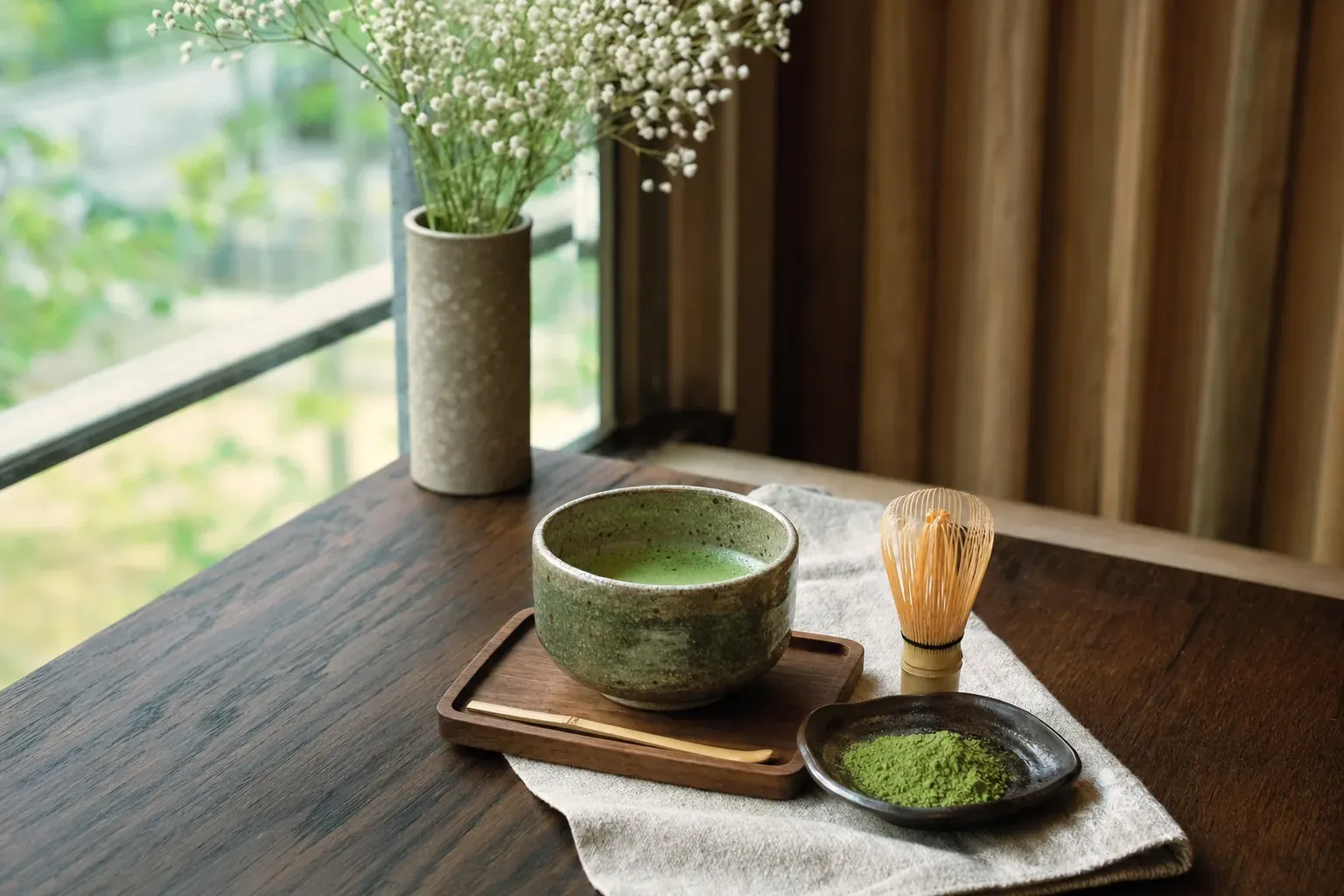
Matcha benefits: virtues, caffeine and how to enjoy it well
More than an Instagram trend, matcha is a Japanese green tea you drink leaf and all. What science really suggests about its virtues, its caffeine versus coffee, and how to prepare it properly.
Where does this green powder everyone talks about come from?
Matcha has left the quiet circles of the tea ceremony for café counters and Instagram feeds, prized for its bright colour, creamy foam and promise of energy without the coffee crash.
This guide takes matcha as an ingredient, not an address: what research suggests about its virtues, how its caffeine compares to espresso, how it differs from ordinary green tea, and how to prepare it — no overselling.
What matcha really is
Ground green tea vs infused green tea
Unlike ordinary green tea, matcha is the whole leaf ground into a fine powder you drink in suspension — so you consume the leaf itself, not just what an infusion releases.
It comes from shaded tencha leaves, steamed, dried, de-veined and stone-milled; shading boosts chlorophyll and L-theanine, hence the deep green and gentle taste.
Whole leaf, full concentration
Drinking the whole leaf means far more catechins, caffeine and L-theanine per volume than infused green tea — which is why a small, careful dose is enough.
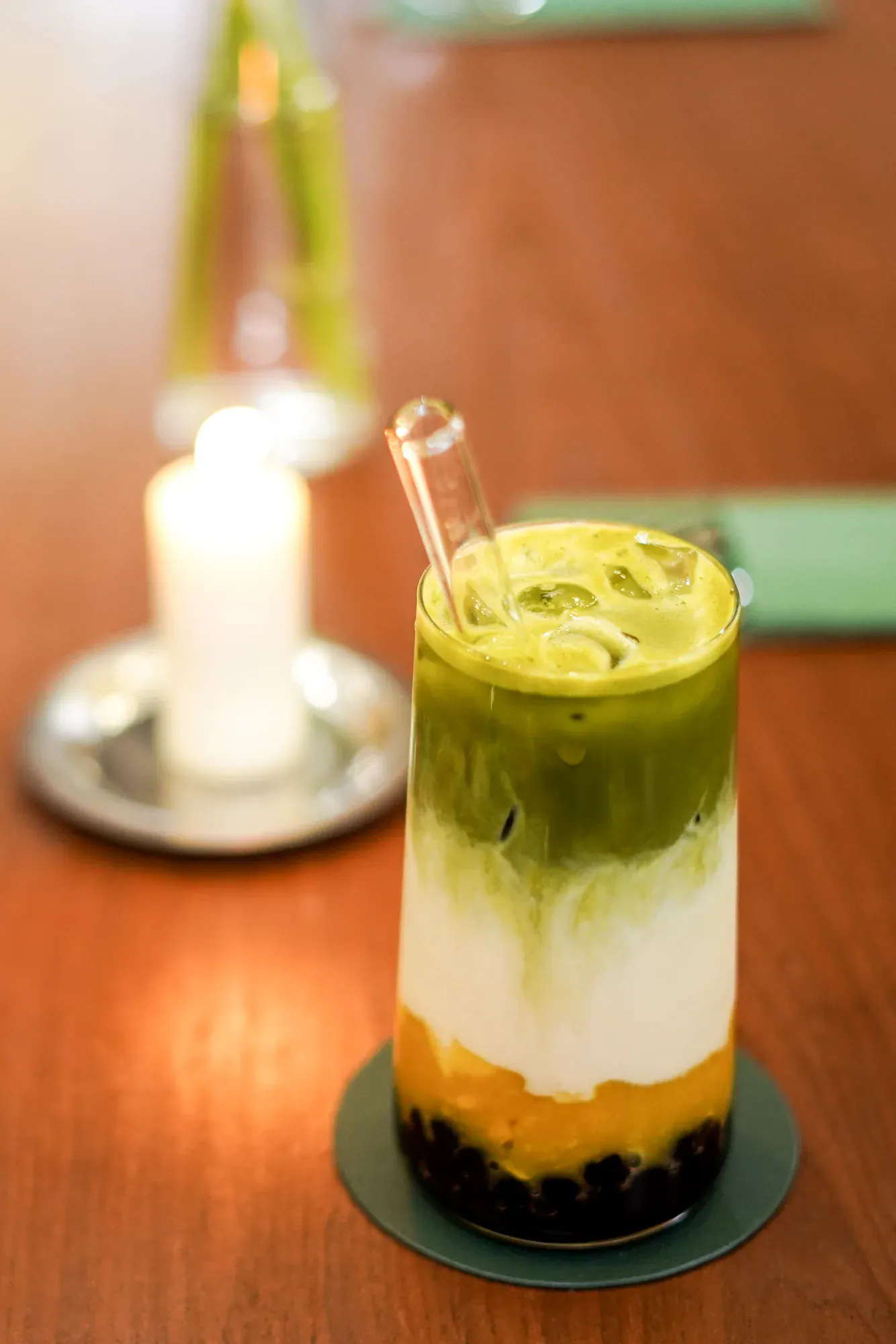
Grades: ceremonial or culinary
Ceremonial grade is the finest powder from young early-harvest leaves: vivid colour, silky texture, gentle bitterness — drunk plain, whisked with water.
Culinary grade is sturdier and holds up against milk or sugar, structuring lattes and desserts. Neither is better in absolute terms — just made for a different use. A good latte needs an honest, fresh powder, kept from air and light.
Japanese origin and Asian adoption
Matcha was born in Japan, rooted in the tea ceremony from the 16th century, with Uji near Kyoto its historic home — carrying the idea of a cup as a moment of presence.
From there it spread across East Asia and beyond. Taiwan wove it into modern drinks — bubble teas, iced lattes, desserts — with the same demand for freshness. That crossed heritage is what a careful tea house echoes today.
The benefits of matcha, reviewed
Studies suggest several interesting leads, but no powder replaces a good lifestyle. Here is what can reasonably be said, with measure.
Antioxidants (catechins, EGCG)
Matcha is rich in catechins, including EGCG, studied for their role against oxidative stress. Drinking the whole leaf delivers more than a simple infusion — a real asset within a varied diet.
Gentle energy and focus
The caffeine + L-theanine pairing is linked to calm alertness: energy without the jitters or the crash of coffee. It is the effect most often reported by daily matcha drinkers.
Metabolism
Some research points to a slight metabolic support — not a slimming solution. The effect is modest and replaces no simple rule: move, sleep, eat well.
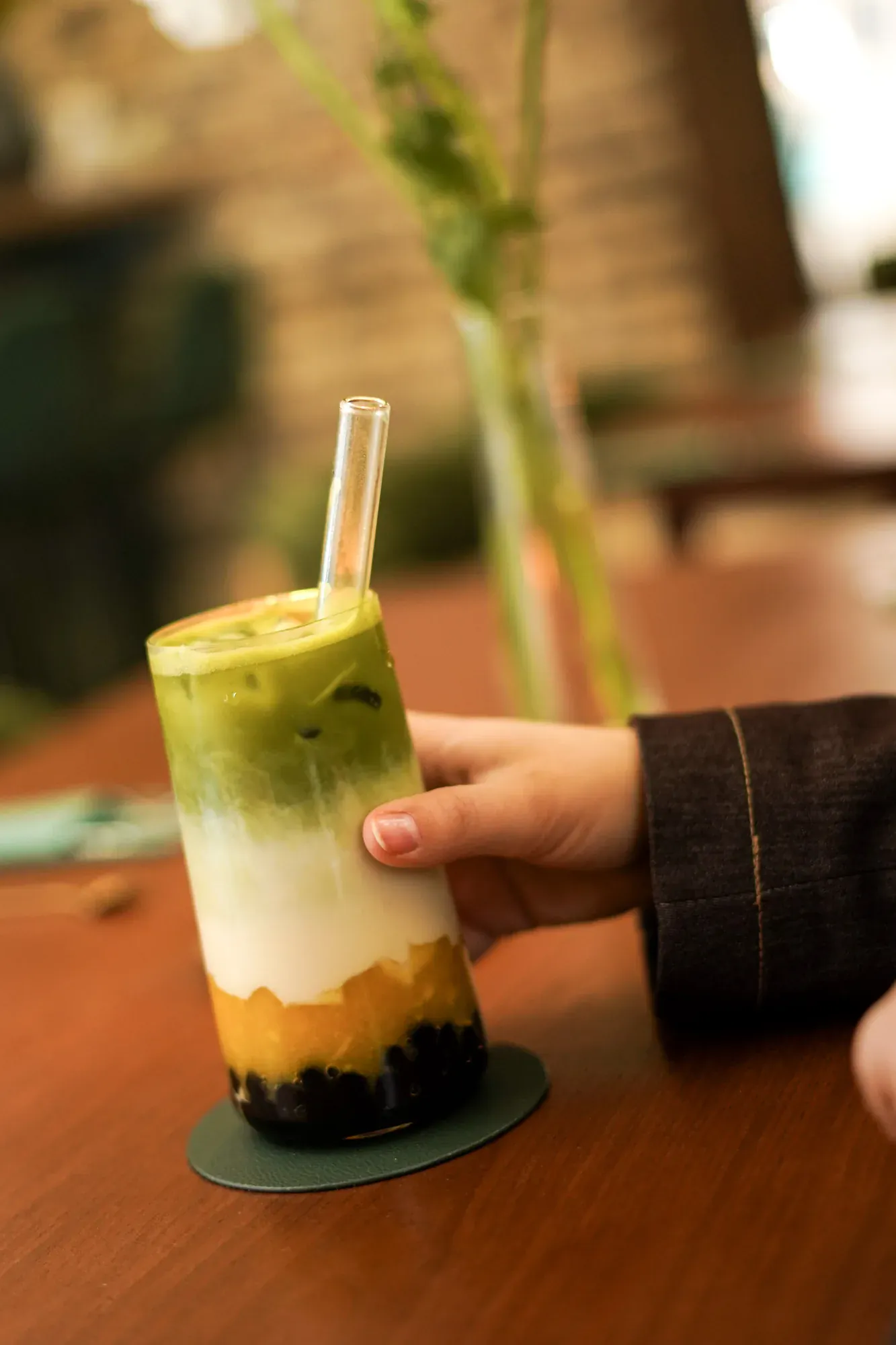
Gentle energy and L-theanine
Matcha’s appeal is the quality of its energy: caffeine travels alongside L-theanine, an amino acid abundant in shaded leaves and linked to attentive relaxation, which smooths the caffeine curve.
Many describe clear but steady alertness without the edginess of a strong coffee, and without the sharp drop that follows. Nothing magical — just the leaf’s chemistry working in your favour when the powder is good and well prepared.
Matcha and metabolism
This is where claims overreach fastest. Green-tea catechins, concentrated in matcha, may modestly support energy expenditure — but a cup of matcha melts no kilos.
The honest read: matcha is a good companion to healthy habits, a low-sugar drink that beats soda or syrupy coffee. See it as a wellbeing ingredient, not a treatment.
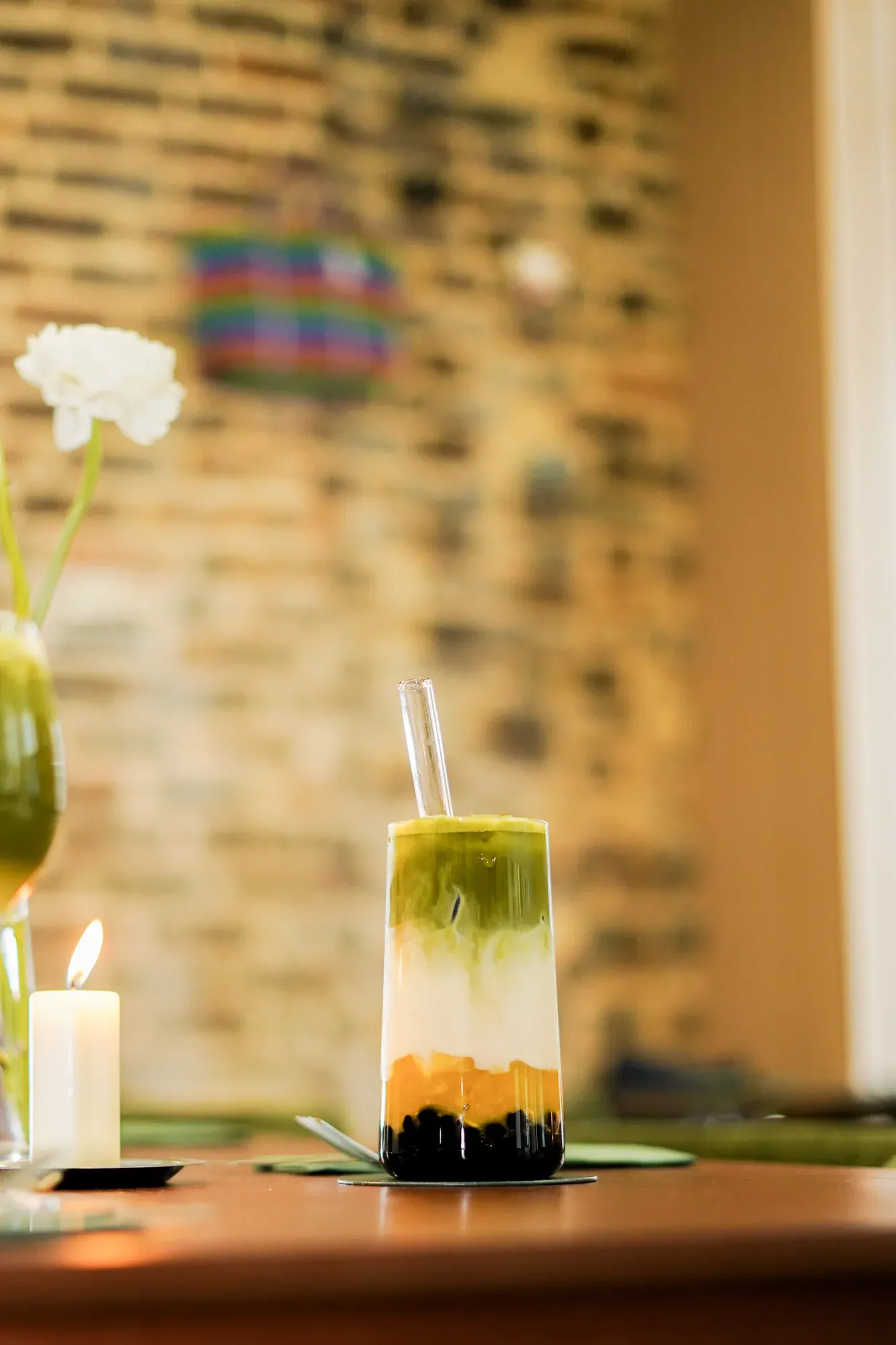
Matcha and caffeine: how much really?
Per serving, a cup of matcha sits near an espresso — often just under a large filter coffee, well above infused green tea, since you drink the whole leaf and get all its caffeine.
The decisive difference is kinetics: thanks to L-theanine, matcha’s caffeine releases more gradually and lasts longer, without the nervous spike or dry crash. A rule of thumb: a well-dosed matcha ≈ an espresso for caffeine, but with a far gentler curve.
Matcha vs other green teas
Matcha is still green tea, but in its own category: an infused sencha gives a clear liquid with only the soluble fraction, while matcha has you drink the whole leaf in suspension — more intensity, texture and concentration.
In taste, matcha offers rounded, creamy umami from shading, where many green teas play bright and light. Neither is superior; to widen the picture of Taiwanese and Japanese leaves, the benefits of oolong tea usefully rounds out this comparison on the high-altitude semi-oxidised side.
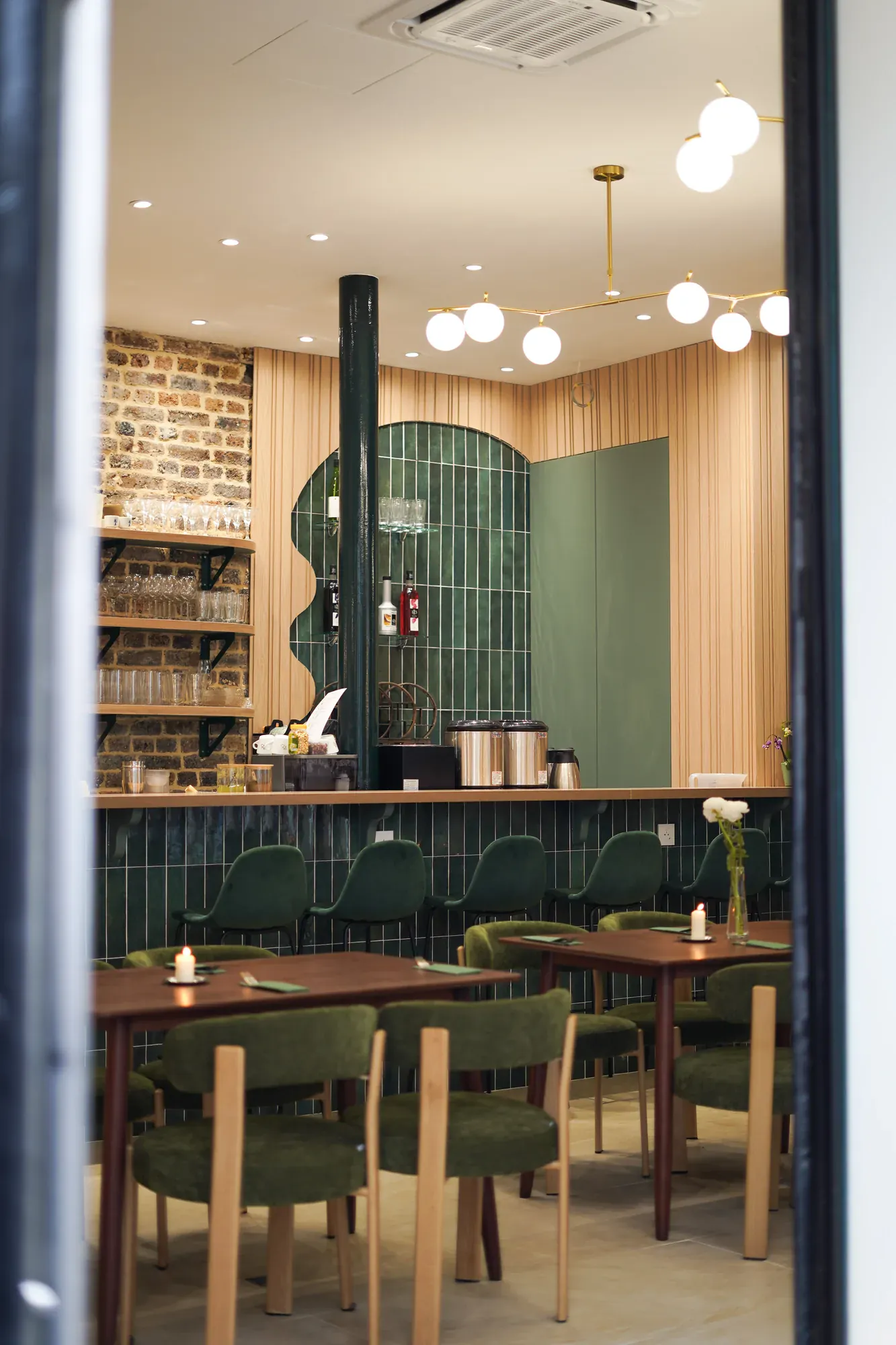
Where to enjoy a good matcha in Paris
The best way to grasp all this is to drink one, made properly. At the Le Tê tea house, by the Palais-Royal, the same demand for freshness and provenance as for high-altitude Taiwanese teas applies: hand-dosed powder, the right water temperature, a careful whisk.
Want the indulgent, on-the-go version? The matcha bubble tea turns the same powder into an iced drink with tapioca pearls. And if you are after a matcha latte in Paris made calmly, settle in to enjoy it on site rather than on the move.
Matcha benefits: your questions
Does matcha make you lose weight?
Not on its own. Its catechins may modestly support metabolism, but the effect is small. Matcha helps by replacing sugary drinks — as long as you don’t drown it in syrup; it is no slimming product.
Can you drink matcha every day?
Yes, for most people one or two servings a day fit fine within reasonable caffeine intake. Matcha holds about as much caffeine as an espresso; if pregnant, caffeine-sensitive or on medication, ask a health professional.
Can you drink matcha in the evening?
Not advised if you are caffeine-sensitive, as a serving holds as much as a coffee. L-theanine softens the effect but does not cancel it. For late day, prefer a caffeine-free or decaf tea.
How much caffeine is in matcha vs coffee?
Per serving, a well-dosed matcha is close to an espresso: often less than a large filter coffee, far more than infused green tea. The key difference is a more gradual, steadier release.
How can you tell matcha has gone off?
Stale matcha turns dull green or yellowish, smells like hay and tastes flat or bitter. Keep the powder cool, airtight and away from light, and use it quickly after opening to keep its vivid colour.
Do you need a special whisk for matcha?
A bamboo chasen gives the best foam, but a small metal whisk or electric frother works well. What matters is sifting the powder and using water at about 80 °C, never boiling.
Going further
Want to go from theory to the cup? Our pillar on the bienfaits du matcha gathers the best matcha latte addresses in Paris and points you to those that prepare the powder properly.
How to enjoy matcha well
The traditional preparation (usucha)
Sift half a spoon of powder into a bowl, pour water at about 80 °C — never boiling — and whisk briskly in a W with a chasen until a fine, even foam forms. The result, usucha, is drunk as is, vegetal and silky.
The matcha latte
For a latte, whisk a concentrated base with a little warm water, then top with hot or cold milk. Culinary powder holds up better against milk. Sweetened sparingly, a good latte lets the tea speak.
Common mistakes
Three faults ruin most failed matchas: boiling water that turns the powder bitter, wrong dosing (bland or harsh), and stale powder left in air or light. Fresh matcha, warm water, an energetic whisk — almost always enough.