The gaiwan
A lidded porcelain bowl, neutral and ideal for beginners.
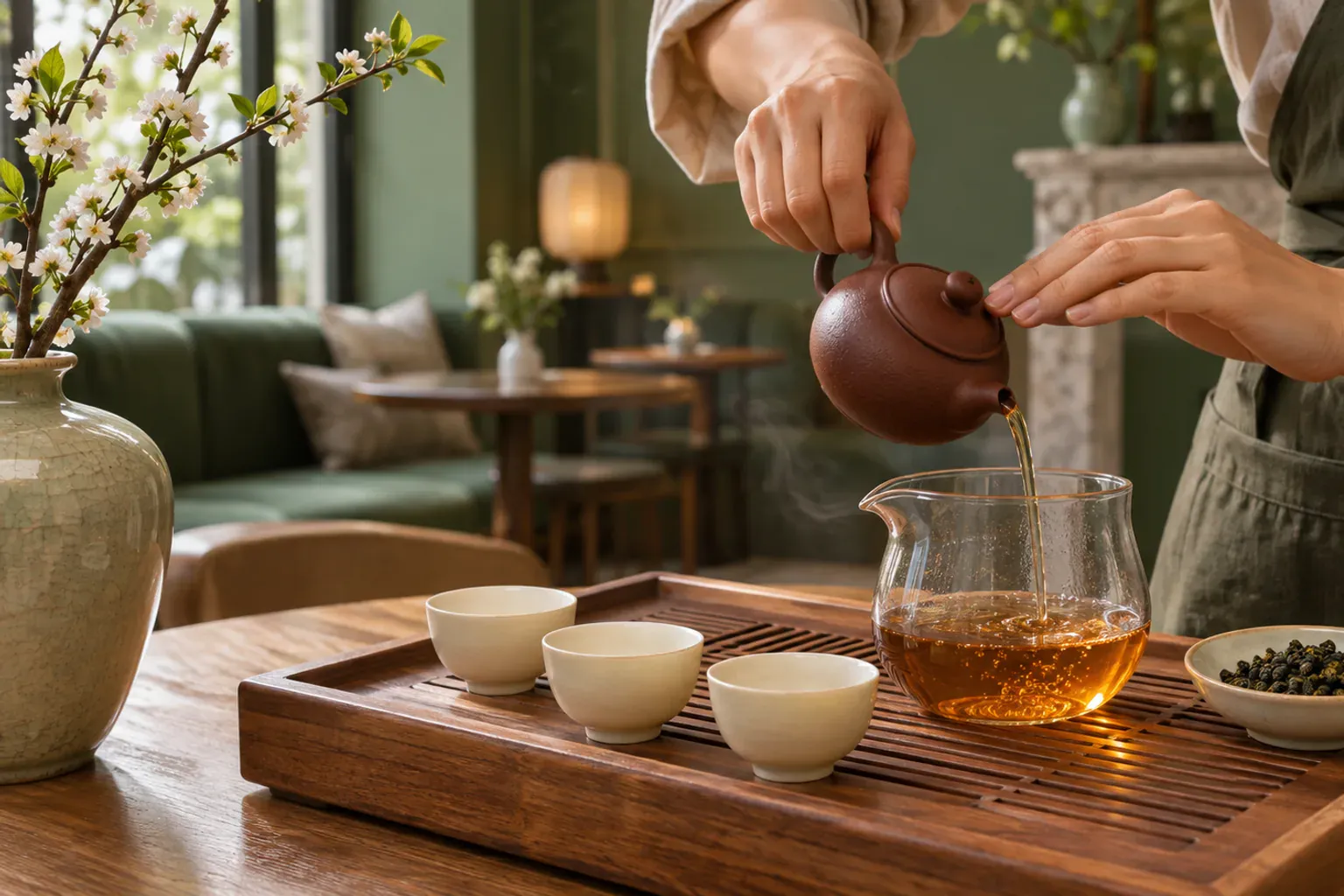
One handful of leaves, five or six different cups. Understand gong fu cha and learn to brew it at home.
Read the contentsGong fu cha (“tea made with skill and care”) is a brewing method from south-east China (Chaozhou, Fujian) that became central to Taiwanese tea culture. Many leaves, little water, a gaiwan or small teapot, and a series of very short infusions that each reveal a new side of the tea. It suits oolongs best, especially Taiwanese high-mountain oolongs. A gaiwan, a kettle and two cups are enough to start.
Same leaves, several short infusions, and each cup tastes different: that is gong fu cha.
This guide covers origins, gear and practical settings, and where to find its spirit in Paris, for instance in a Chinese tea house in Paris.
A way of brewing with a high leaf-to-water ratio and many short infusions.
Often called the “Chinese tea ceremony”, it is a domestic craft rather than a codified rite.
Gong fu means time, effort and skill put into a task.
Associated with Chaozhou and southern Fujian, it travelled to Taiwan with Fujianese migrants. Exact dates remain uncertain.
Many leaves, little water, short repeated infusions.
Chaozhou-style brewing is direct and convivial.
Lao ren cha (“elders’ tea”) became chayi (“tea art”), which introduced the wenxiang bei, a tall aroma cup.
Long, relaxed sessions where guests often brew their own tea.
See also our article on tea cultures in Asia.
Gong fu cha needs very little.
A lidded porcelain bowl, neutral and ideal for beginners.
Yixing clay, Taiwanese clay, porcelain or glass, 80 to 150 ml.
Stops extraction and evens out every cup.
A 100 ml gaiwan, a kettle and a mug as a pitcher. Fill it only three quarters full.
A typical session with a rolled Taiwanese oolong and a 100 ml gaiwan.
Rinse everything with hot water.
A quick rinse opens tightly rolled leaves.
Always empty the gaiwan completely.
Starting points for a vessel of about 100 ml.
| Tea family | Leaves | Temperature | 1st infusion | Next infusions |
|---|---|---|---|---|
| Rolled high-mountain oolong | 5–7 g | 90–95 °C | 30–40 s | +10–15 s |
| Roasted oolong | 5–7 g | 95–100 °C | 15–20 s | +5–10 s |
| White tea | 4–5 g | 85–90 °C | 20–30 s | +10 s |
Lengthen a few seconds each time; stop when the liquor turns flat.
It crushes floral notes.
Ten seconds too long changes everything.
Fill three quarters and hold by the rim.
Complex, whole-leaf teas that evolve over infusions.
High-mountain oolongs, Dong Ding, Oriental Beauty and Baozhong.
For benefits and varieties, see our oolong tea guide.
Good: black, pu-erh, white. Poor: tea bags, broken or flavoured teas.
Small cups train attention to detail.
Smell each stage; hui gan is the sweet aftertaste returning in the throat.
Lined-up cups show how a tea evolves.
A few specialists serve gong fu style; look for origin, temperature care and re-infusion.
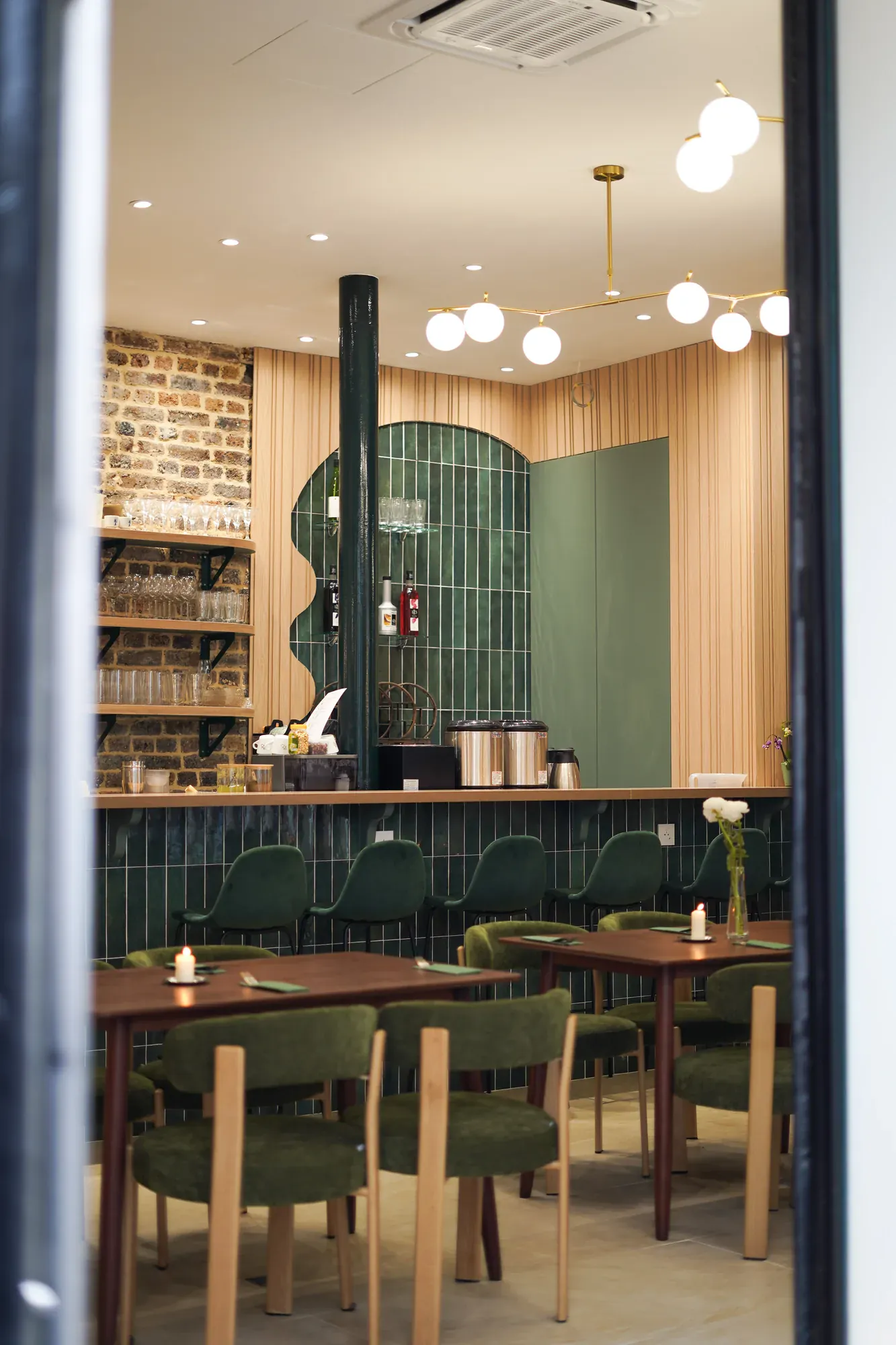
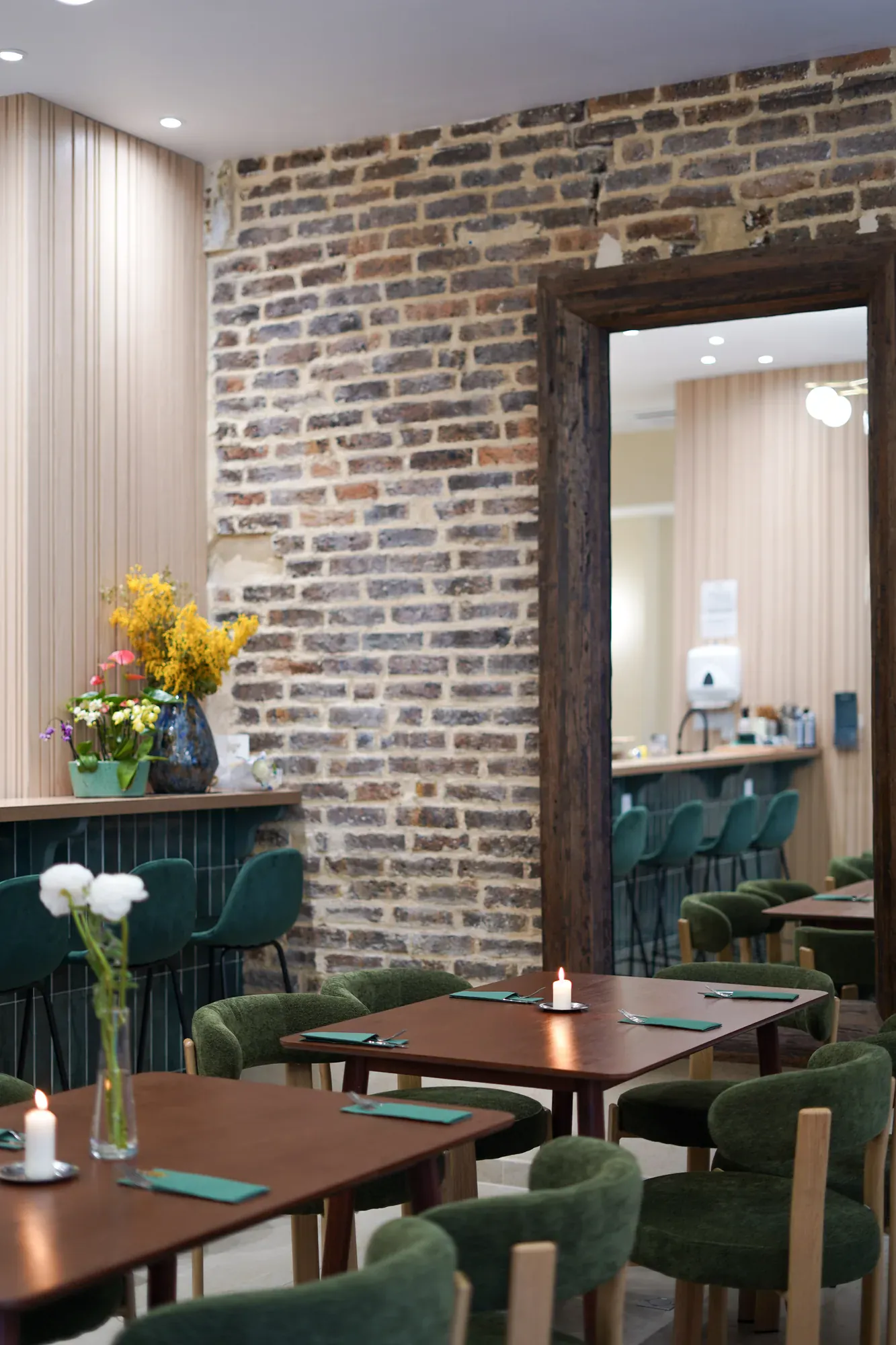
Le Tê does not practise strict gong fu cha but keeps its spirit: right water temperature, individual teapot, a second infusion with the same leaves.
Details on our Chinese tea house in Paris page and our Taiwanese tea house page.
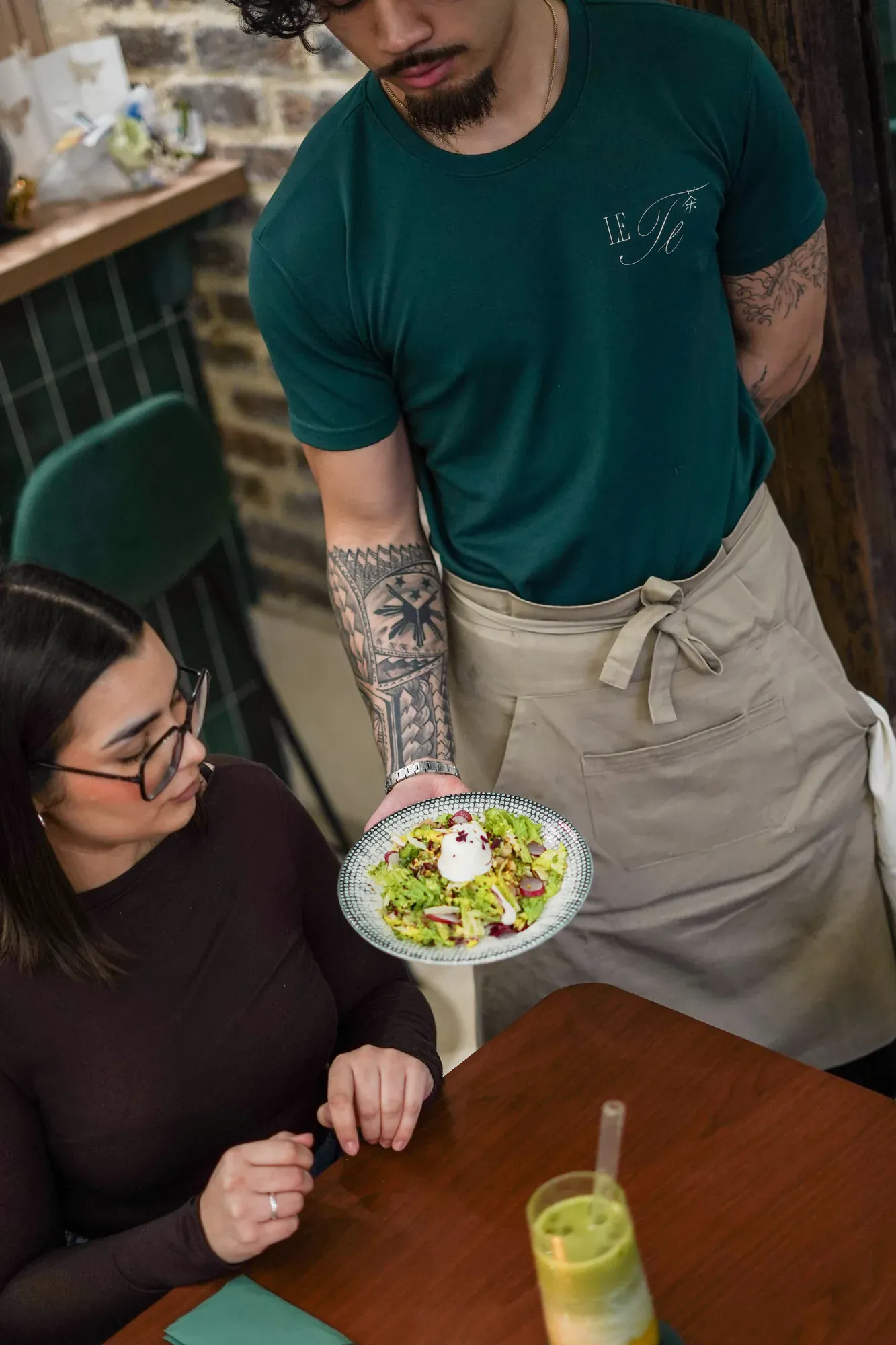
MAISON LE TÊ’s “Tea Ceremony” dishes (Pàng-Thuân and Onigiri Menu in a black-tea broth) are tea cuisine, not gong fu cha. See our Taiwanese cuisine in Paris.
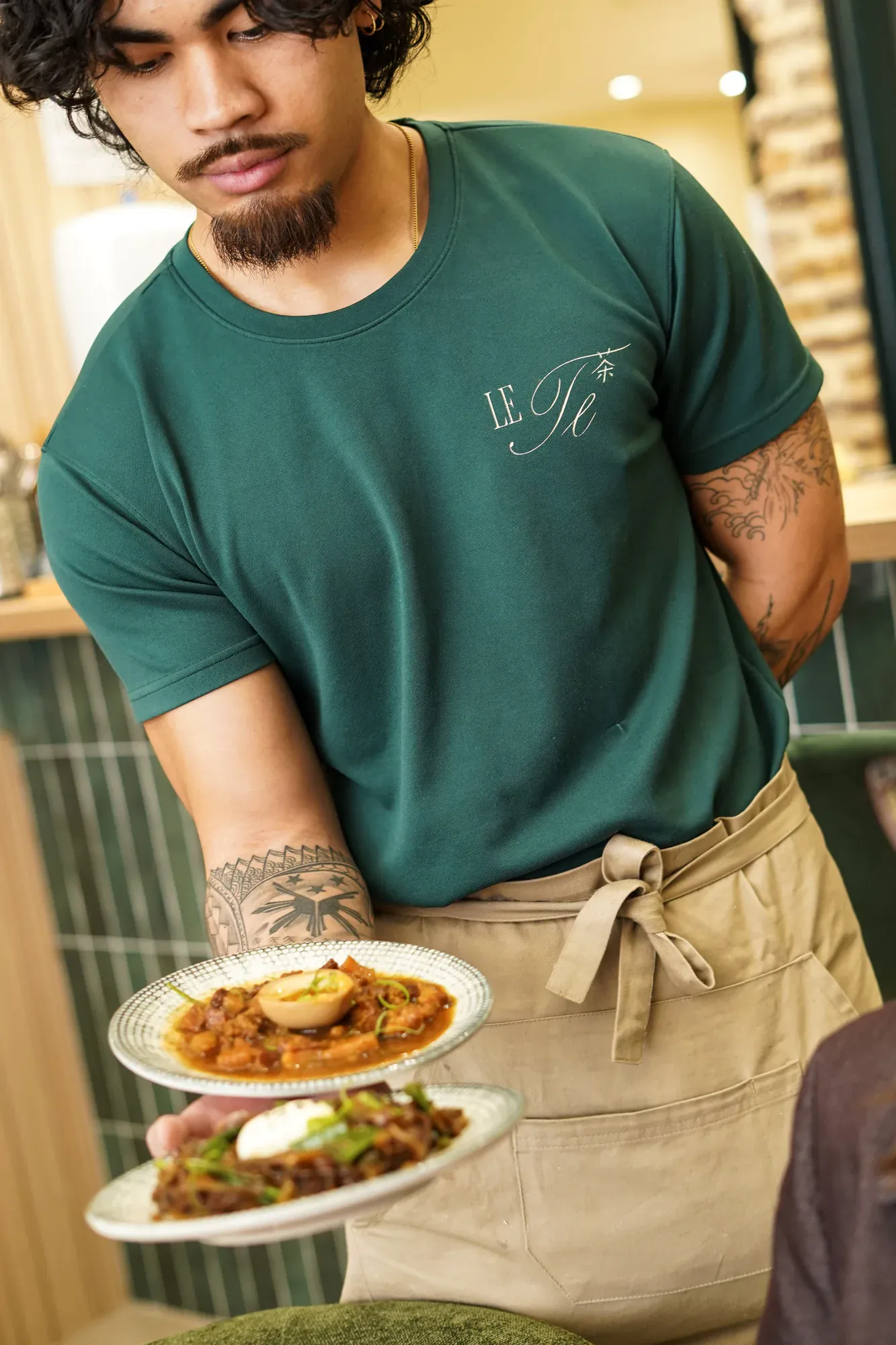
Fancy a high-mountain oolong brewed with care? Visit Le Tê at the Palais-Royal
Discover the tea houseChanoyu is a codified matcha rite; gong fu cha brews whole leaves several times in a freer setting. Read more about the benefits of matcha.
Six to ten for a good oolong.
85 to 100 °C depending on the tea.
Yes: a small teapot, a strainer and a mug are enough.
Twenty to thirty minutes, or much longer.
Each cup holds little, but a full session may total as much as a large cup or more.
See how Le Tê adapts the spirit of gong fu cha at the Palais-Royal.
Related pages